
Description Of Damage
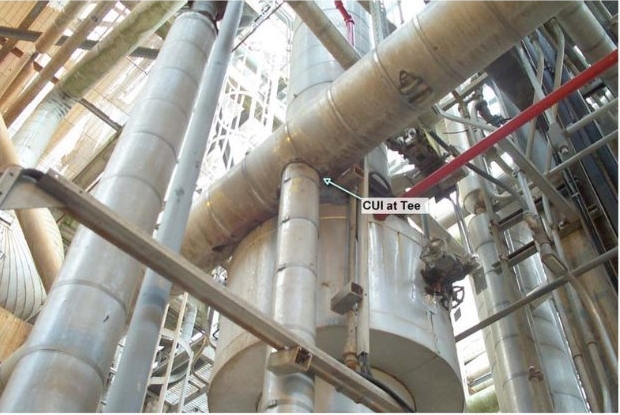
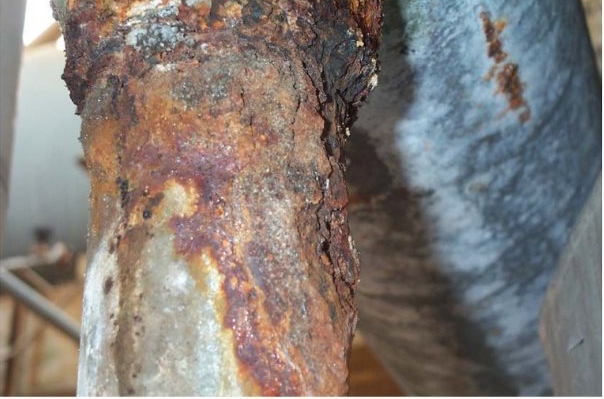
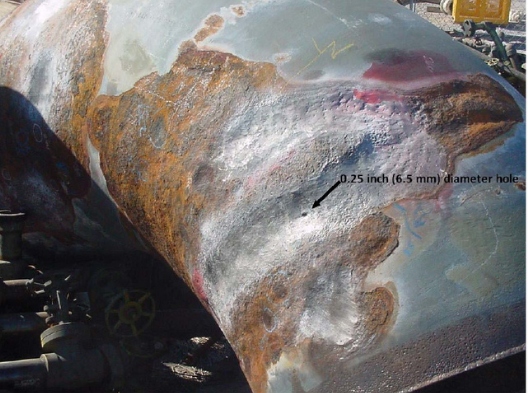
Corrosion of piping, pressure vessels and structural components resulting from water trapped under insulation or fireproofing.
The water can come from rain water, leakage, deluge system water, wash water, or sweating from temperature cycling or low temperature operation such as refrigeration units.
Affected Materials
1. Carbon steel
2. Low Alloy steels
3. 300 Series SS
4. Duplex stainless steels
Critical Factors
1. It affects externally insulated piping and equipment and those that are in intermittent service or operate between:
• 10F (-12C) and 350F (175C) for carbon and low alloy steels.
• 140F (60C) and 400F (205C) for austenitic stainless steels and duplex stainless steels.
2. Corrosion rates increase with increasing metal temperature up to the point where the water evaporates quickly 212F (100C) and 350F (121C).
3. Poor design and / or installations that allow water to become trapped will increase CUI.
Do you want to learn more about CUI? Please click HERE or join our official Telegram Channel HERE for more info.